

← All webinarsWebinar recording
Inside the Rise of Semi-Liquid Evergreen Private Markets
Built to last: two founders on what it takes to run evergreen funds at scale
Two founders who built semi-liquid evergreen funds from the ground up, Andreas Bezner of Stableton and Fabrice Zosso of Swise, discuss what is driving demand for evergreen structures, how liquidity and valuation work in practice, how to structure a fund that banks and wealth managers can buy, and the fund operations that make the model work at scale.
Recorded live on 3 July 2025 · 61 minutes · Andreas Bezner (Stableton), Fabrice Zosso (Swise), Julien De Mayer and Olga Porro (fundcraft)

Watch the full webinar
Chapters
- 0:00 Introduction
- 2:47 Andreas Bezner introduces Stableton
- 4:46 Fabrice Zosso introduces Swise
- 6:31 What is driving the rise of evergreen funds
- 9:25 Why investors want to be fully invested
- 11:53 Evergreen funds vs secondaries
- 14:30 Stableton: growth equity and pre-IPO
- 17:09 Swise: small and mid-cap buyout
- 20:42 How evergreen funds manage liquidity
- 24:59 Structuring the fund: Luxembourg, RAIF and bankability
- 28:51 What wealth managers and banks need
- 32:24 Valuation and NAV
- 35:11 Are evergreen funds the future of private markets?
- 40:03 How fundcraft supports semi-liquid funds
- 46:46 Q&A: why Swise migrated to fundcraft
- 49:46 Q&A: high transaction volumes at low cost
- 51:32 Q&A: keeping the total expense ratio low
- 53:57 Q&A: how an AIFM supports fundraising
- 55:50 Q&A: Stableton's total expense ratio
- 58:03 Q&A: lock-up periods
- 1:00:03 Close
Subtitles available. Click a chapter to jump to that moment in the video.
Recorded on 3 July 2025. Views are the speakers' own; for information only and not investment advice. Important information
Key takeaways
Closed-ended funds were not built for private wealth
Closed-ended structures were designed decades ago for large institutions. Capital calls, uncalled commitments, slow deployment and long lock-ups make them hard to use for banks, wealth managers and smaller family offices. Evergreen funds let these investors deploy in one go, at a known value, with periodic liquidity, much as they would with a public fund.
Being fully invested matters as much as liquidity
Building a diversified closed-ended programme across vintage years can take up to ten years. An evergreen fund gives an investor a diversified private markets allocation from day one, and proceeds are usually reinvested rather than distributed, so returns compound. Fabrice Zosso sees this as more important to many clients than liquidity itself.
Liquidity is designed into the portfolio, not assumed
The two managers approach liquidity differently. A late-stage growth equity portfolio can draw on active secondary markets for its holdings. A buyout portfolio holds a sleeve of cash, money market instruments and private debt, and adds expected distributions from secondaries. Both cap redemptions at fund level; Fabrice describes around 20% of NAV a year, or 5% a quarter, as market standard.
Bankability opens the wealth channel
Luxembourg and the RAIF regime, often as a SICAV-RAIF, give managers a faster and cheaper route to market than a fully regulated fund. Share classes with ISINs settled through Clearstream let banks and wealth managers book the fund into client custody accounts and portfolio reporting. The back office has to be built with banks from the start.
Dealing at NAV keeps valuations honest
Investors in an evergreen fund enter and leave at NAV, not at a secondary market discount. That puts pressure on valuation quality in both directions: marks that are too high or too low harm either incoming or exiting investors. Valuation inputs differ by strategy, from aggregated secondary market prices for late-stage companies to quarterly valuations from lead managers in buyout co-investments.
Operations decide whether the model scales
Evergreen funds raise capital continuously, with monthly subscriptions, multi-currency share classes and frequent transactions. Olga Porro describes the fundcraft platform capabilities built for this: API connectivity to distributors and custodians, digital direct subscriptions with end-to-end KYC and subscription queues, automatic bank reconciliation, digital redemptions with liquidity gating, and integrated payments, operated by fundcraft's own teams.
Questions from the audience
How long does it take to migrate an evergreen fund to fundcraft?
For Swise, about a month. Fabrice Zosso explains that the fund moved to fundcraft after a year with a provider that relied on manual processes, in part to handle hedged share classes in US dollars, euros and Swiss francs digitally. "The integration went very smooth, actually. We did it in a month."
How can an evergreen fund keep costs low at high transaction volumes?
By automating the accounting rather than adding people. Andreas Bezner describes running five to twelve secondary transactions a month, each through an SPV administered by fundcraft, with the fund NAV built from the sum of SPV holdings. Done manually, he says, costs would explode; straight-through accounting and data feeds keep them low.
Do evergreen funds need lock-up periods?
Usually, but often soft ones. Many evergreen funds apply a hard lock-up in the first one or two years, or a soft lock-up where early exit carries a redemption fee of around 5%. Both speakers stress that evergreen funds are long-term investments with liquidity for unexpected needs, not products to trade in and out of.
Why semi-liquid evergreen funds are growing
Evergreen structures held close to USD 700 billion in 2025, and Hamilton Lane expects that to quadruple over the next decade. Demand comes from institutional allocators, wealth managers and private investors who want private markets exposure with more liquidity, simpler access and better transparency.
In the webinar, Fabrice Zosso notes that around half of investable wealth sits with private investors who had little access to private markets in the past, and that the number of evergreen private equity funds has grown from a handful to several hundred in ten years. Smaller pension funds and family offices are following, for the same reason: the operational complexity of closed-ended programmes is hard to carry without large in-house teams.
~USD 700bnheld in evergreen structures in 2025 (Hamilton Lane)
4×expected growth over the next decade (Hamilton Lane)
~5 → 500+evergreen private equity funds, ten years ago and today (Fabrice Zosso, Swise)
Speakers
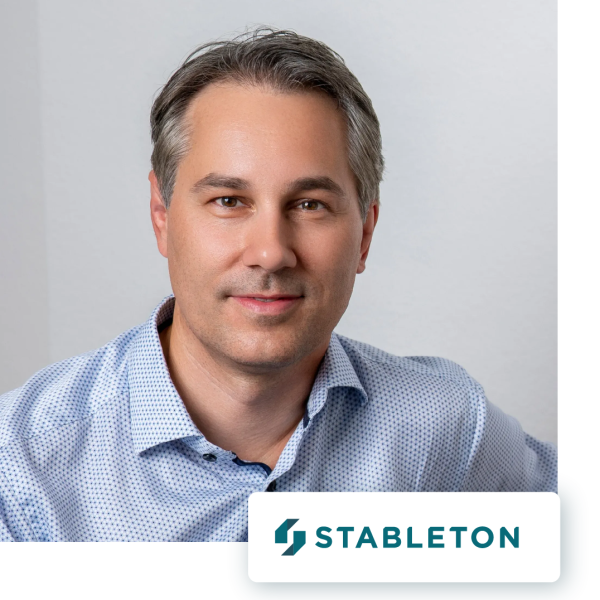
Andreas Bezner
Co-founder and CEO, Stableton
Andreas Bezner is the co-founder and CEO of Stableton, the go-to partner for investing in private blue-chip tech companies. Andreas has built a wealth of experience across transaction consulting, portfolio management, and over 100 venture capital secondary market transactions. A serial entrepreneur with extensive experience in public markets, hedge funds, and private equity, Andreas previously founded and managed a long/short equity hedge fund, served as a technology fund manager, and consulted in alternative investments.
Update: Stableton passed USD 1 billion in assets under management in September 2026.
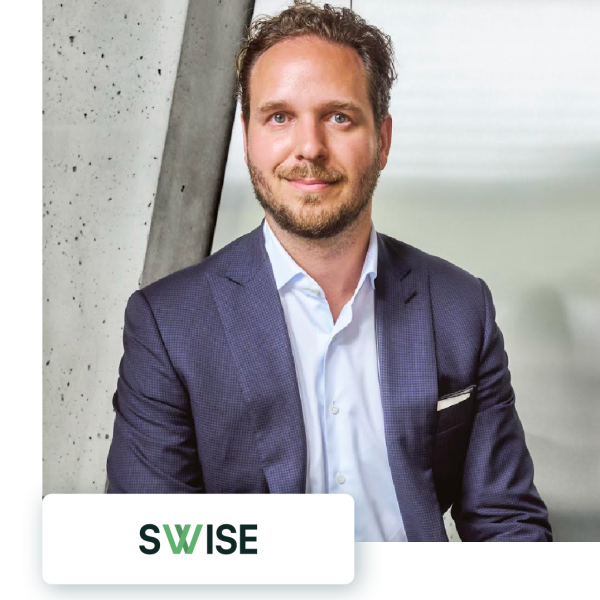
Fabrice Zosso
Co-founder and CEO, Swise
Fabrice Zosso is the co-founder and CEO of Swise, a digital private markets platform reimagining evergreen private equity for modern investors. A pioneer in structuring, constructing, and managing evergreen solutions, Fabrice has spent over a decade at leading private equity asset managers such as Partners Group and Petiole Asset Management, where he led efforts to scale semi-liquid strategies for institutional and private clients.
At Swise, he is applying that experience to build investor-centric, open-ended fund vehicles that combine institutional-grade access with automation, bankability, and a seamless digital experience.


Running or launching an evergreen fund?
fundcraft operates semi-liquid, evergreen and ELTIF funds on one regulated operating model. Talk to our team about your structure, dealing calendar and distribution set-up.
Important information
This recording is provided for information purposes only and is intended for professional investors. It does not constitute investment, legal or tax advice, an offer or solicitation to buy or sell any fund or financial instrument, or a recommendation of any investment. Views expressed by guests are their own and do not necessarily reflect those of fundcraft. Figures, fund terms and fees mentioned were stated by the speakers on 3 July 2025 and may have changed since. Past performance is not a reliable indicator of future results. Funds discussed may be available only to professional or well-informed investors and only in certain jurisdictions. fundcraft is authorised by the CSSF in Luxembourg as a Central Administrator and Alternative Investment Fund Manager (AIFM). fundcraft France is authorised by the AMF as a portfolio management company acting as AIFM (authorisation no. GP20260008).